
Understanding Care Home Funding
Care home funding can feel complicated, especially when decisions need to be made quickly. Everyone’s situation is unique and we’re here to help you understand the options available to you. This guide explains what you may need to pay, what support could be available and where to start.


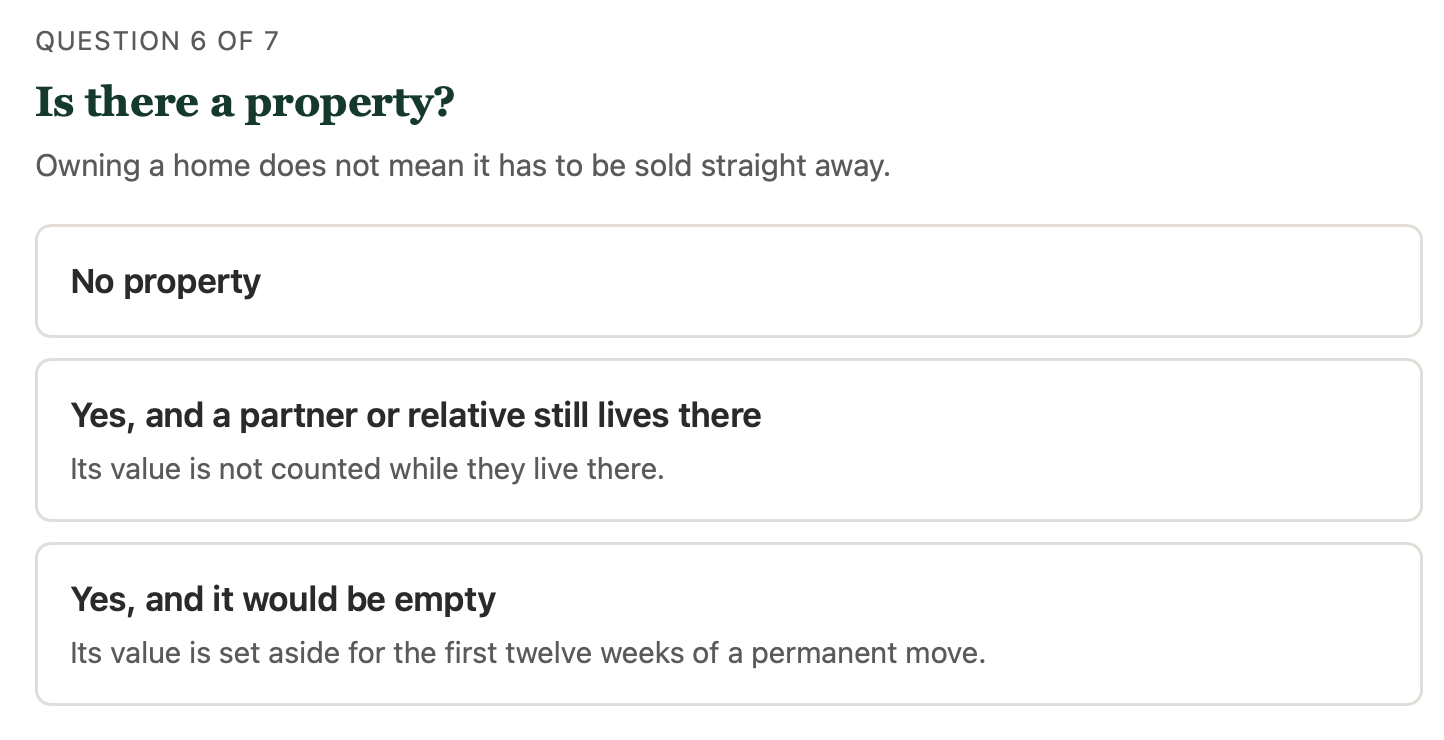
Not sure what funding you might be entitled to?
Our UK Care Funding Checker gives you a simple place to start. Answer a few simple questions about your circumstances and we'll help you understand more about paying for care and which options may be worth exploring.
It only takes a couple of minutes and you don’t need to know anything about care funding before you start.
This checker is designed as a guide and does not determine eligibility or replace a formal financial or care assessment.
What Care Home Fees Cover
Care that’s tailored to you
Round the clock support from our friendly, supportive teams with a care plan shaped around your individual needs, preferences and routines.
Spaces to make your own
A fully furnished en-suite bedroom, with housekeeping and laundry included, and shared spaces to enjoy throughout the home.
Good food and fulfilling days
Delicious home cooked meals with regular activities, events and outings into our local communities and beyond.
What’s included can vary between our homes, so we’ll always explain your fee clearly, including anything that may cost extra.
Understanding your care needs and finances
There are usually two parts to understanding what support may be available. A care needs assessment looks at the care and support you or your loved one needs, while a financial assessment looks at things such as income, savings and, in some circumstances, property.
The rules and financial limits vary depending on where your care home is based, but you don’t need to navigate everything on your own. Our funding guide explain the different options and current figures in more detail.
If your savings are getting closer to the funding threshold, it’s a good idea to speak to your local council early. Financial assessments can take time, and we can help you understand what to expect and signpost you to further support where needed.
Where support may come from
There isn’t one way that care is paid for. You may pay for some or all of your care yourself, or help may be available through your local council, the NHS or benefits.
The rules are different in England and Scotland, so choose where you live to see what may apply to you.
Paying for care yourself
If your savings and assets mean you do not qualify for council funding, you will usually pay the home’s fee yourself. This is often called self-funding.
Even when you are paying privately, other support may still be available depending on your care needs.
Help from your local council
Your local council may contribute towards the cost of care after a care needs assessment and a financial assessment.
The care assessment looks at the support you need, while the financial assessment looks at what you can afford to contribute. They are separate assessments, and the amount of help available depends on your individual circumstances.
Help from the NHS
If your needs are mainly health related, NHS Continuing Healthcare may cover the full cost of your care. It is based on your care needs rather than your savings.
If you need care from a registered nurse but do not qualify for Continuing Healthcare, NHS-funded Nursing Care may contribute towards the nursing part of your care in a home registered to provide nursing care.
Benefits you may be entitled to
Attendance Allowance and Personal Independence Payment are not means-tested and may provide extra support, depending on your age and circumstances.
Whether they continue after you move into a care home can depend on who is paying for your care, so it is worth checking your individual position.
Paying for care yourself
If your savings and assets mean you are paying the home’s fee yourself, this is often called self-funding.
In Scotland, paying privately does not necessarily mean you receive no help at all. If you have been assessed as needing personal or nursing care, payments towards those parts of your care may still be available.
Help from your council
Your council may contribute towards the cost of care after a care needs assessment and a financial assessment. Your care needs are assessed separately from your money.
How much you are asked to contribute depends on your income, savings and circumstances.
Free Personal and Nursing Care
If you have been assessed as needing personal care, your council can pay a weekly amount towards it regardless of your savings or income. Where nursing care is also needed, an additional nursing payment may apply.
If you are paying for your own care, these payments are made to the home and come off the amount you pay. You still need a council assessment to receive them.
NHS funding for complex health needs
Scotland does not use NHS Continuing Healthcare in the same way as England. Hospital Based Complex Clinical Care is for people whose needs are so complex that they can only be met in hospital.
For most people living in a care home, health-related support is provided through the nursing care payment rather than full NHS funding.
Benefits you may be entitled to
In Scotland, Pension Age Disability Payment has replaced Attendance Allowance, while Adult Disability Payment has replaced Personal Independence Payment for working-age adults.
These benefits are not means-tested. Whether they continue after you move into a care home can depend on who is paying for your care.
Funding is about more than savings
There are other things that can affect how your care is funded. Here are a few you may come across:
If you own your home
Owning your home doesn't mean you'll need to sell it straight away. Depending on your circumstances, there may be other options available, such as a deferred payment agreement with your local council. We can help you understand what to explore and signpost you to specialist advice where needed.
Top up payments
If the home you choose costs more than the amount your local council has agreed to pay, an additional top up may be needed. Here at Each Other Care, we'll make sure any fees are explained clearly, so you and your loved ones understand what to expect.
Benefits
You or your loved one may also be entitled to benefits that can help towards the cost of care. What you can receive can depend on your individual circumstances and how your care is being funded, so it's worth checking with your local council what support may be available.

Our care home fees
At Each Other Care, we believe in being transparent about the cost of our care. You can see the current fees for each of our homes, so you have a clearer idea of costs at the start of your care journey. Fees are usually tailored to the level of support, so it’s best to talk it through with one of our team. They’ll explain everything clearly, so you know exactly what to expect.
View our care home fees:
Find a care home near you
Enter a town or postcode to find your nearest Each Other Care homes and see their current starting fees.
Download our complete care funding guides
We understand there’s a lot to consider when looking for the right care home, and our guide provides useful guidance and external resources to help you as much as possible.
You can download the guide by clicking on the link below depending upon where you are looking for care.

Still not sure what applies to you?
Care funding can feel complicated, and you don’t need to know which route applies before getting in touch.
We can arrange a free care assessment to understand the care and support you or your loved one may need. Our team can then talk you through the options available at our homes and help point you towards the right council, NHS or independent advice where needed.
Support Services


